einszett Car Care Products Toll-Free: 1.888.719.4698

home | my account | contact | cart Shopping Cart0 item(s)
Gift Ideas & Sets
Pre-Cleaners
Wash
Car Polish
Pro-Line Polishes
Car Wax
Interior Care
Plastic, Rubber & Vinyl Care
Leather and Upholstery Care
Air Conditioner Treatment
Wheel & Tire Care
Glass Care
Wheel Paint
Chain Lubricant
Winter Care
Applicators + Dispensers
Accessories
Automatic Carwash
Gift Certificate
Sale
Samples
Outlet


Follow us on Facebook Follow our blog Follow us on YouTube

Home > FAQ

FAQ

The following are answers to the most common questions we receive concerning the product line. If you don't find your question answered, please contact us and we'd be more than happy to provide the answer you need.


Are silicone-based polishes and waxes bad for paint?

This is a long-standing myth that can't seem to go away. The fact is, silicone -based products are only harmful to new paintwork that is between 60-90 days old. During this period, fresh paint is still releasing solvents. This process is termed "off-gassing". The silicone in silicone-based polishes and waxes will coat the paint preventing the paint from drying properly. This can harm the appearance of the paint when it is fully cured. For this reason, einszett offers silicone-free polish and wax in their Pro-Line product range for use by paint shop professionals.

So unless you work in a paint shop environment, we highly recommend our Shop-Line polishes which are professional grade but contain silicone which makes application much easier, enhances gloss and offers additional water resistance.

Note: Keep in mind that in addition to avoiding silicone-based products on fresh paint, also avoid applying wax and acrylic based sealants.
Top of page


What is the difference between a polish and a wax?

Polishes are the most essential product in the overall appearance and condition of the paint finish. Polishes clean and condition the finish at the same time. There are polishes formulated to remove paint finish issues such as hazing (white, oxidized paint that looks dull) while other polishes are formulated to remove more serious issues such as light scratches and severe hazing. Light polishes such as einszett PolishWax rely on chemical cleaning of the paintwork while medium cut polishes such as einszett Paint Polish or strong cut (compound) polishes such as Extra Paint Polish rely both on chemical and mechanical (abrasives) to rectify more serious paintwork issues.

A true wax is designed to act as a second layer of paint. Instead of your paintwork receiving the harsh effects of the environment directly, wax acts as an invisible shield. A true wax will not clean the paintwork or remove any minor scratches or swirl marks. Waxes are available in natural carnauba and synthetic and usually a combination of both. einszett Glanz Wax is a synthetic-based wax (also known as "polymer wax") with a small amount of carnauba for added depth and gloss. Since Glanz Wax is primarily synthetic, it has the long-lasting durability that is characteristic of synthetic waxes and therefore more applicable for everyday driving conditions. Top of page


How often should I polish and wax my car?

Polishing

This all depends on how often your car is used. If it is a daily driver, we recommend you polish the paint finish about 2-3 times a year. If your car is rarely used we recommend 1-2 times per year.


Waxing

Waxing can be done at a more frequent rate. However, because einszett Glanz Wax is primarily a synthetic wax (also known as "polymer wax") and therefore more durable than carnauba-based waxes, the paintwork will remain protected as long as four to six months. Again, many factors effect how often you will need to wax your paintwork. For instance, depending upon your local climate, whether conditions, etc, you may need to wax your more often or less often.

Top of page


Why use car shampoo when I can use dish washing detergent or lower cost car shampoos?

While the differences may appear to be almost non-existent, there is a large difference between a quality shampoo such as einszett Perls Shampoo and regular dish washing detergent or car shampoos found at major chain stores. Detergents used in lower cost products usually have a higher pH level that is not compatible with car waxes and polishes. In the case of dishwashing detergents, they cannot tell the difference between the oils that are food-based and car wax. It looks at the two as one and the same and therefore will strip any wax or polish on your paintwork resulting in a loss of paintwork protection.

In the case of lower cost car shampoos, in order to keep costs low, they are formulated with higher alkaline (high pH level - over 7.0 which is neutral) detergents that are lower in cost but can remove sensitive car waxes.

An easy way of knowing if a shampoo has lower cost detergents is by the amount of suds the wash produces. The higher the alkaline level, the more suds the carwash solution produces and therefore the higher the chance it will be aggressive towards wax finishes. 

einszett Perls Shampoo is a pH neutral (near water which is 7.0 on a pH scale of 0-14) solution formulated to work in harmony with einszett's range of waxes and polishes. Its highly gentle formula will not strip wax or polish but is formulated to remove dirt and debris on your car's paintwork. In addition, einszett Perls Shampoo contains a revolutionary additive that adds a layer of polymer wax on the surface for protection and gloss.

Top of page


Polymer vs. Natural Wax: Please Explain?

The word "polymer" literally means a large molecule attached to a small molecule. In simplest terms, a "polymer" refers to any compound that is synthetic. Therefore, a product that has polymers in it means that it is synthetic-based. An example of this is einszett Glanz Wax.

Natural waxes refer to carnauba wax, bees wax and paraffin. Carnauba is the most durable natural wax available. It provides exceptional shine and depth and is synonymous with car wax.

Durability

The primary advantage of synthetic wax is durability. With all the environmental factors that today's daily drivers experience, synthetic wax is far superior in terms of longevity in comparison to natural waxes. Even though carnauba wax is the most durable natural wax it is not durable enough to last long in today's driving environment where brake dust, acid rain, UV rays, bird droppings, and tree sap are constantly bombarding our car's paint finish. To make carnauba waxes more durable, manufacturers add some polymer wax to the formulation. There isn't a wax on the market that is 100% natural wax. There also isn't a carnauba wax that is 100% carnauba. Carnauba is very hard in its natural form before being processed for car wax application.

einszett has been formulating Glanz Wax with synthetic waxes for over 50 years because of its proven protection. To give you a sense of the durability of synthetic wax versus carnauba wax, the synthetic wax in einszett Glanz Wax has a melting point around 300F. That's about a hundred degrees higher than carnauba. You may ask yourself where on Earth we experience 300F. Consider this: imagine driving on a hot summer day. Your engine produces a lot of heat which is absorbed by the hood of your car (or the trunk if you're lucky enough to be driving a rear-engine sports car!). In the meantime, your hood is also absorbing heat from the sun located at high noon. Measure the amount of heat on the hood and you will see what several hundred degrees of heat feels like (by the way, this is not recommended!). Ambient temperature (the temperature we usually refer to when we state what the temperature outside feels like) is not the same as the temperature on your hood's paint finish just like it's not the same on the sidewalk or black top. Carnauba wax simply can't handle this type of heat for too long without breaking down and evaporating. On the other hand, polymer waxes like Glanz Wax, can.
Top of page


Does einszett Spray Wax remove wax?

No. As a matter of fact, einszett Spray Wax contains synthetic waxes (also known as "polymer wax") that enhance paintwork protection. Applied on a regular basis and as part of an overall paintwork regimen of polishing and applying einszett Glanz Wax twice a year, you can achieve months of long-lasting protection and gloss.
Top of page


Is einszett compatible with other brands?

We recommend you use
einszett products exclusively for best results since they are designed to work together as a complete system. This is especially true in regards to the polishes and wax. However, you can use einszett with other product brands without any negative results. Please check with other brands if their products are compatible with other brands as well - this is usually the case.
Top of page


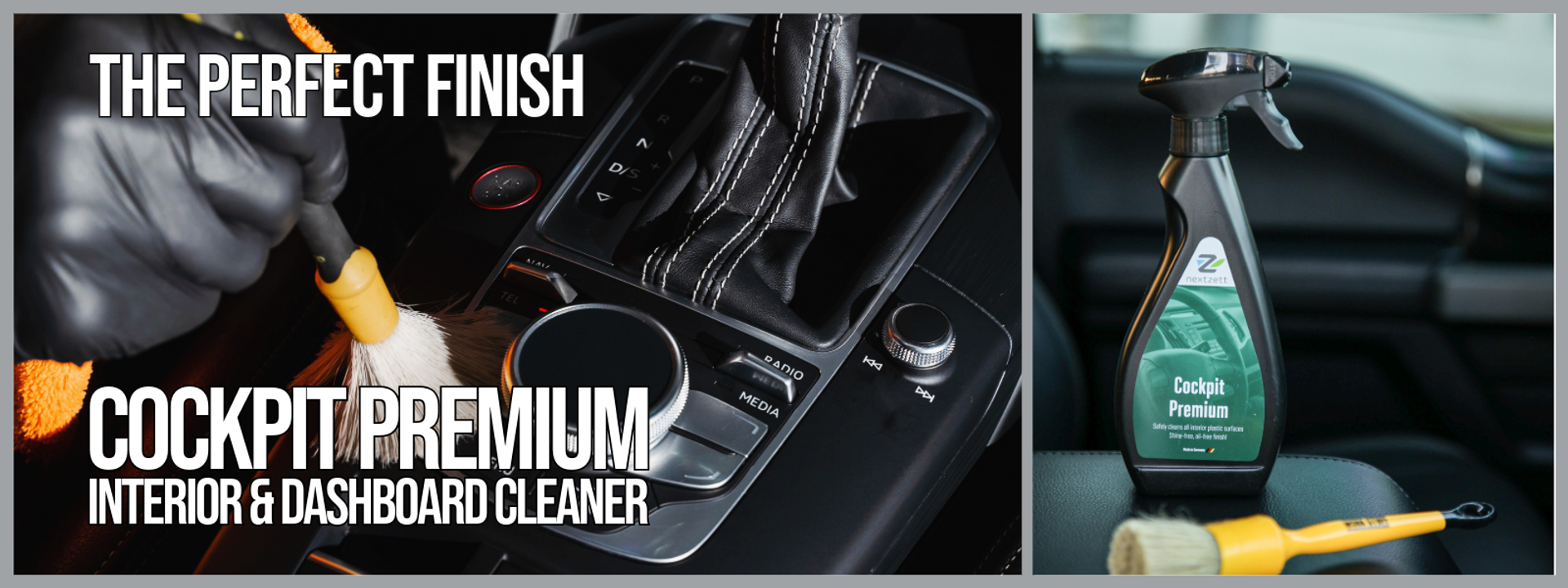
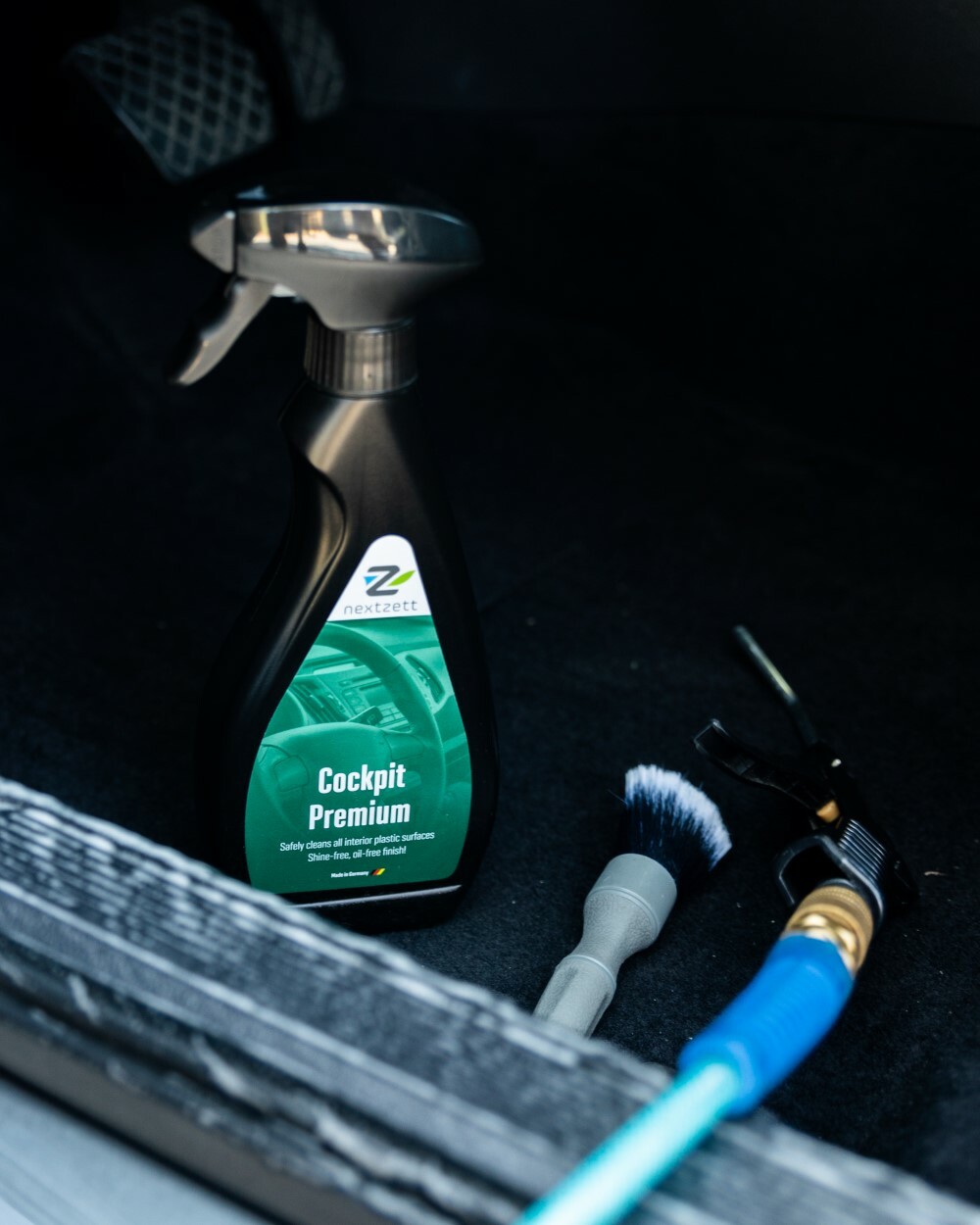
Does Cockpit Premium contain UV protection?

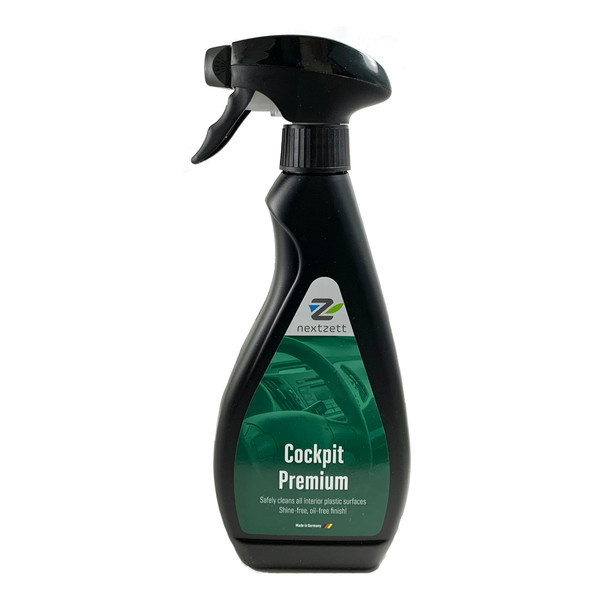
einszett Cockpit Premium contains a minimum amount of UV protection. This is because interior surfaces are not exposed to the same UV exposure as exterior surfaces since automotive glass filters a great deal of UV rays which can cause fading over time. However, Cockpit Premium does contain protectants that prevent fading due to heat.

If you need a plastic, vinyl and rubber cleaner and protectant with strong UV protection, use einszett Vinyl-Rubber Care and Protectant. It offers maximum protection from UV rays and is water and wash resistant for a long-lasting finish. Please note, Vinyl-Rubber Care should not be applied on the steering wheel, shift knob or pedals because of a danger of slippage.
Top of page


Can Kristall Klar Washer Fluid be used in the winter?

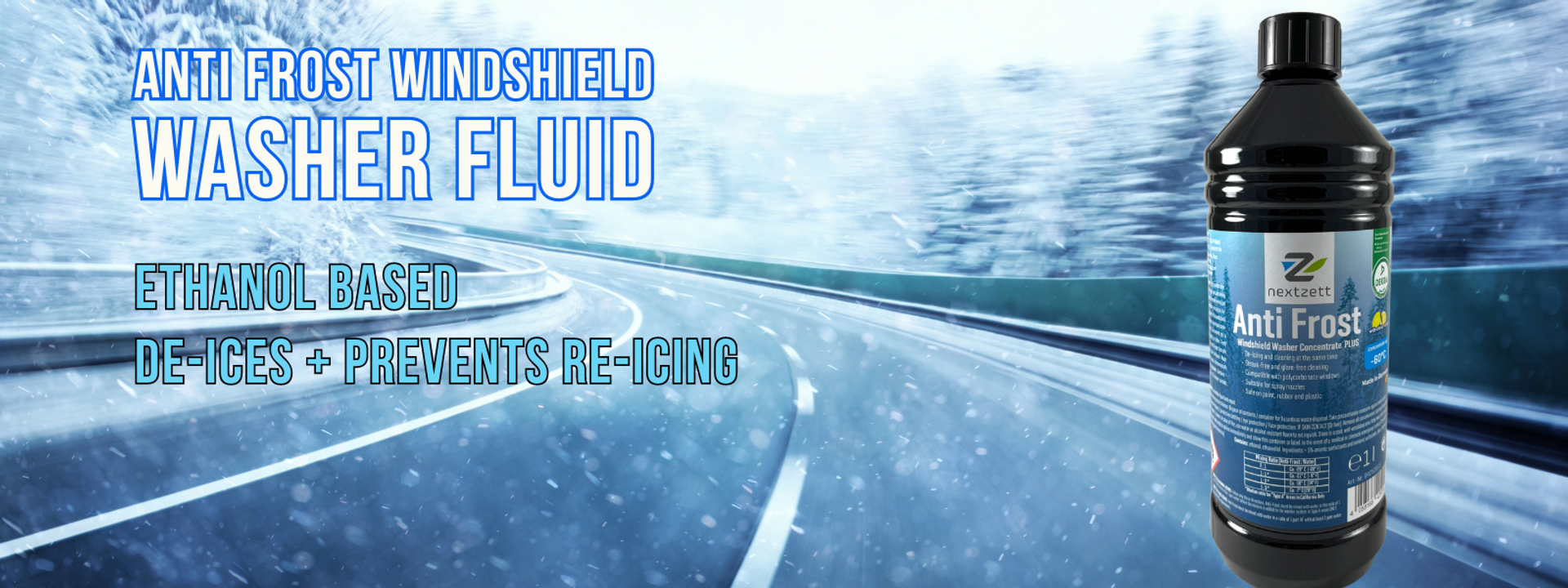
einszett Kristall Klar is not formulated to be used in the winter. It is only effective to near freezing (32°F / 0°C). einszett Anti-Frost Washer Fluid is our winter washer fluid formula (part of our Winter Care line) and is effective up to -22°F (-30°C) when mixed correctly. Anti-Frost does not contain toxic methanol found in most off the shelf brands. It is available between the Fall and end of Winter of each year.
Top of page


Should I use distilled or tap water with Kristall Klar Washer Fluid and Anti-Frost Washer Fluid?

Our windshield washer fluids were formulated to be easy to use and convenient. This is especially the case at automotive factories and dealerships where tap water is easily accessible. For this reason, we've formulated both washer fluids to work best when mixed with regular tap water. The only exception to this is if you only have access to well water. Kristall Klarr and Anti-Frost Washer Fluid both contain water conditioners to soften hard water. If they are mixed with distilled water, the washer fluid mixture will foam excessively and cause smearing hindering optimum performance. So keep it simple and convenient and use good ole tap water. If you have well water, mix in some distilled water but make sure the water remains slightly hard for best cleaning performance.
Top of page


Does PolishWax (Metallic) remove swirl marks?

einszett PolishWax contains very fine abrasives primarily for cleaning the paint finish and not correcting issues such as swirl marks and light scratches. PolishWax is formulated to bring out the best and protect new and like-new paintwork finishes.

For paintwork corrections such as swirl marks and light scratches, use einszett Paint Polish.

For severe paintwork defects such as severe oxidation and deeper scratches, use einszett Extra Paint Polish. Top of page


What is formalin?


Formalin is a generic term which describes a solution of 37% formaldehyde gas dissolved in water. Formalin, a common preservative is often used in car care products to extend shelf life but formalin also causes an allergic reaction with some people. For this reason, we avoid the use of formalin in our products. Top of page
 

What should I use for application: microfiber towel, cotton towel, foam applicator, old t-shirt, cloth diaper?

Old cotton t-shirts and cotton cloth diapers seem to go hand in hand with applying carnauba paste waxes. But times have changed and there are better ways of applying polishes and waxes that will give you much better results.

First, we must immediately eliminate as choices cotton t-shirts and cloth diapers - flannel shirts too. Even though they're made from cotton, these choices are too thin and can scratch today's sensitive clear coat finishes. They may have been fine when paint was a thick, durable lacquer. Since they are thin, they're unable to keep away any grime or grit that they pull from the paint finish away from the surface. As the polish pulls debris from the finish, it stays on the cloth's shallow face. As you pull more grime and grit, the surface of the cloth becomes more gritty. Imagine how gritty it will be by the time you near the end of polishing your car's entire paint finish?!

Always use an applicator that has depth to it and therefore can pull any grime or debris into its base and away from the paint finish. Such applicators include microfiber towels, foam applicator pads and plush cotton towels.

Now, which do you choose for which job? Let's take a look...

Foam applicator pad

Foam applicator pads are disc shaped foam. They are very soft and durable. They can be washed for multiple uses and they are economical. They can be used for applying polish, wax and tire dressings.

When to use:

When polishing new or like-new paint finishes that have no surface issues such as light scratches or swirl marks. Use when applying einszett PolishWax or einszett Final Finish.


Microfiber Towel

Microfiber towels are made of synthetic fibers. Their fibers are microscopic and have an incredible ability to 'grab' dust and grime while being very gentle at the same time. Microfiber also has a fantastic ability to absorb liquids. Their durability means they can be washed hundreds of times without losing their strength or ability. Essentially, it's a super fiber and should be the staple of every detailer. einszett offers the einszett Microfiber Towel and Microfiber Wash Mitt.

When to use:

Microfiber towels can be used dry or wet to remove dust from all car surfaces including paint, plastic and metal. It can also be used to apply polish or wax. Apply polish with a microfiber towel if you need a 'biting' factor that fits between that of a foam applicator pad and a cotton towel.

Microfiber towels are a great way to buff off applied polish or waxes. They remove the excess product with ease without leaving smears or streaks.

Tip: Always wash microfiber towels separately from other fibers since they're ability to grab also means they are able to grab lint from cotton towels. Also, never use fabric softener which applies a silicone on the tips of the fiber and can inhibit their ability to grab and absorb.


Cotton towel


Only use a 100% cotton towel. It should be plush. Do not use the towels that can be purchased in bulk because they are usually a blend of polyester and cotton even though they say 100% cotton. Also, never use old t-shirts, rags, cotton diapers or flannel to polish. They are too thin and can scratch the surface as the polish pulls in debris into the fiber. A quality cotton towel with thick fibers will pull debris into the base of the towel and away from the paint.


When to use:

When polishing paint that has surface issues such as haze (oxidation), swirl marks or light scratches. Use when applying einszett Paint Polish or einszett Extra Paint Polish. Top of page


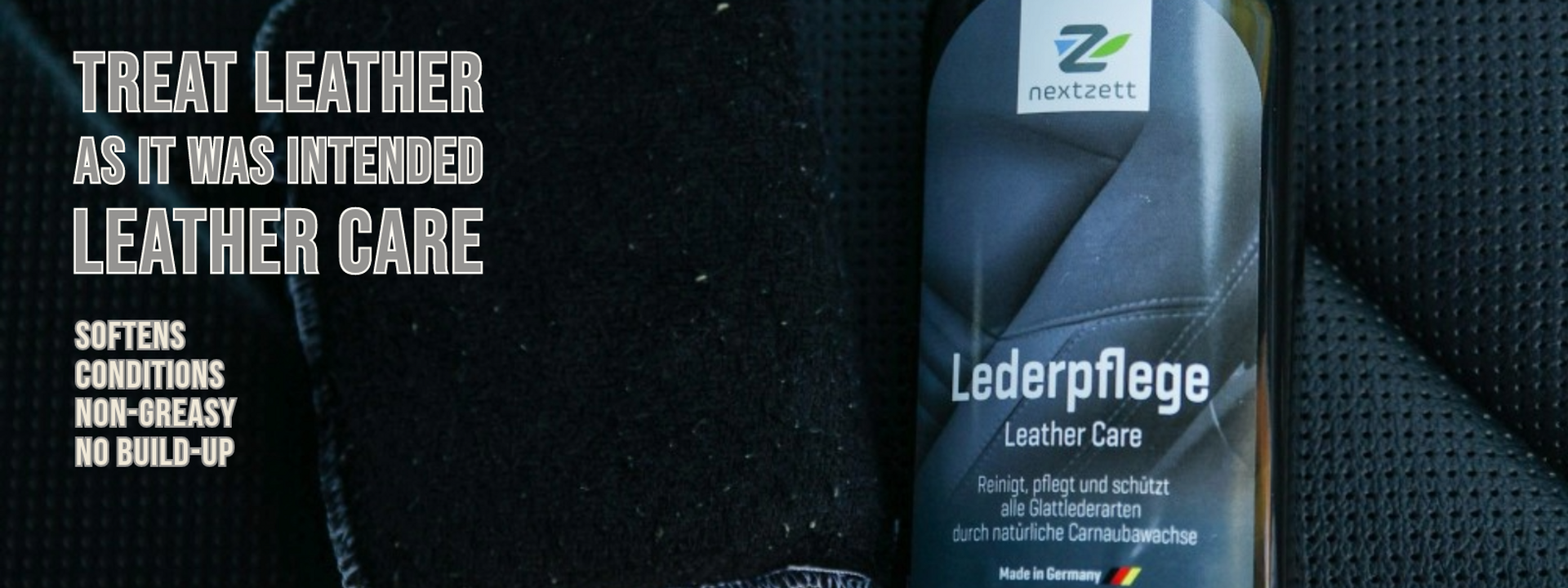
Can I use Leather Care on vinyl surfaces?


You might be asking this question if you have car seats that are a combination of leather and vinyl. Usually the side bolsters will be made from vinyl and the main seating area will be made from leather.  If this is the case, we recommend that you use Leather Care only on the leather section and avoid the vinyl surface. The cleaners in Leather Care are specifically formulated to treat the finished coating on leather but with repeated application can dry vinyl.

To treat the vinyl sections, we recommend you use Cockpit Premium which will clean the vinyl and prevent it from fading. If you do get any Leather Care on the vinyl portion of the seat, do not be worried. Simply wipe off.

If you're unsure about what portion is leather, contact your dealership or contact the manufacturer.

Incidentally, it's safe to use Cockpit Premium to clean finished leather surfaces. Just keep in mind that it doesn't condition the finish, so you'll want to follow up with Leather Care.
Top of page


My online order arrived but the products are frozen because of the freezing weather. Are the products still good?

When products are shipped during the winter, they can be exposed to below freezing temperatures which can cause them to freeze. For detergents and cleaners, this does not negatively harm the products. Simply allow them to defrost and return to room temperature.

Unfortunately, our polishes can be negatively altered. If they allowed to freeze the water and oil emulsion can separate. Even after returning to normal temperatures, the oil and water will remain separated. Shaking the product or stirring it will bring the emulsion back together again but it will separate again. The only way to mix them together successfully is through a special machine that raises the temperature significantly. Since this is unrealistic for the end user, not much can be done. We therefore recommend purchasing polishes online during the winter months. In the meantime, you can still use the product but it will require that you shake the product thoroughly before and during use.

Remember to store your einszett products closed and in a shaded area. If possible, it's best to keep them in a temperature controlled environment. Properly stored, our polishes and waxes have a shelf life of approximately three years while our cleaning and care products and detergents have a shelf life of seven years.
Top of page


What is the shelf life of einszett products?

When properly closed and stored in a shaded area our polishes and waxes have a shelf life of approximately three years while our cleaning and care products have a shelf life of seven years. If possible, it's best to keep them in a temperature controlled environment.
Top of page


1z einszett car care 101 detailing guide